
Moving to Toronto (2026): Neighbourhoods, Costs and Everything You Need to Know
Everything you need to know about moving to Toronto in 2026: downtown and family neighbourhoods with recent prices, costs, jobs, the TTC, weather and a complete relocation checklist.

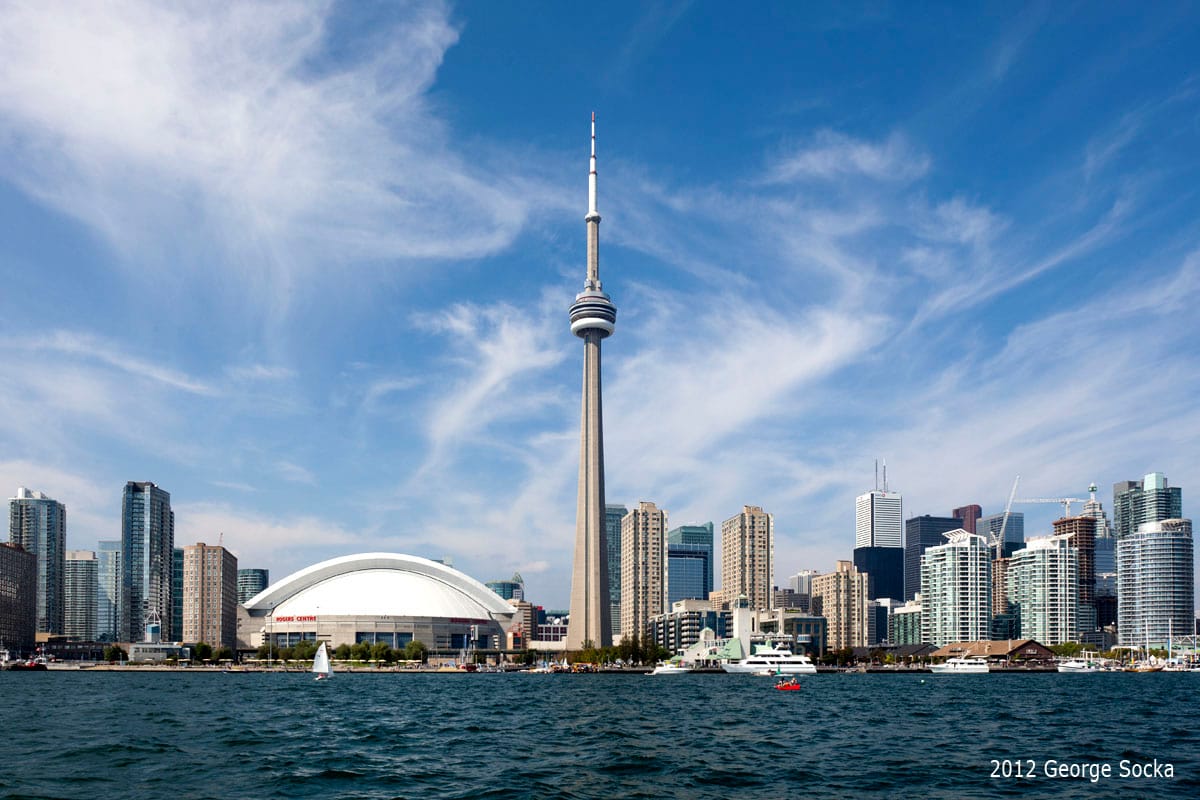
The first time most people visit Toronto, they see the CN Tower, Union Station and a few blocks of downtown. Then they move here and discover it's really a city of more than 140 neighbourhoods, each with its own personality. You can eat dim sum in Chinatown for lunch, walk the boardwalk in The Beaches in the afternoon and catch a Raptors or Leafs game at night, all without a car.
Looking for a home in Toronto? Browse all Toronto MLS listings, updated daily.
I've helped people move to Toronto and the GTA since 2013, from young professionals taking a job on Bay Street to families relocating from across Canada and around the world. This guide is everything I'd tell you over coffee: how the city is laid out, the downtown neighbourhoods and what they cost, where families tend to settle, the real cost of living, jobs, transit, weather, and a step-by-step checklist for the move itself.
Want to see homes right away? Browse every home for sale in Toronto.
In this guide
- Toronto at a glance
- How Toronto is laid out
- Downtown Toronto neighbourhoods
- Downtown Toronto map
- Midtown and family neighbourhoods
- Beyond downtown: the inner suburbs and the GTA
- What it costs to live in Toronto
- Jobs and the economy
- Getting around Toronto
- Weather and seasons
- Life in Toronto: what you'll love
- Renting vs. buying when you arrive
- If you're buying: your checklist
- Moving to Toronto checklist
- Moving to Toronto FAQ
Toronto at a glance
| Population | About 3 million in the city, more than 6 million in the Greater Toronto Area |
| Location | On the north shore of Lake Ontario |
| Average 1-bed condo rent | $2,382/month (Q3 2026) |
| Average condo apartment price | $659,214 (Oct 2026) |
| Average detached house price | $1,603,886 (Oct 2026) |
| TTC adult fare | $3.30 with PRESTO, capped at $155.10/month |
| Biggest industries | Finance, technology, film and TV, health care and education |
| Airports | Toronto Pearson (UP Express to Union in about 25 minutes) and Billy Bishop on the Toronto Islands |
How Toronto is laid out
Today's City of Toronto was created in 1998, when six cities joined together: the old City of Toronto, North York, Scarborough, Etobicoke, York and East York. Locals still use those names every day, and they're the easiest way to understand the city:
- Downtown (the old City of Toronto): the financial district, the waterfront, condos and the busiest, most walkable neighbourhoods.
- Midtown: Yonge and Eglinton, Leaside, Lawrence Park and Forest Hill, with more houses and great schools.
- North York: condo hubs along Yonge Street, plus quiet streets with big lots.
- Etobicoke (west) and Scarborough (east): more space for the money, ravines, and the Humber River and the Scarborough Bluffs.
Beyond the city limits is "the 905" (named after the area code), which includes Mississauga, Brampton, Oakville, Vaughan and Markham. Many people who work downtown live there for bigger homes and commute by GO train.
Downtown Toronto neighbourhoods
Downtown Toronto is where most newcomers start, especially if they're working in the core. Most homes here are condos, but there are also Victorian houses, semis and townhouses tucked into the older neighbourhoods. Prices below are average sold prices for October 2026 from MLS® data. One month can swing in a small area, so treat them as a guide.
The Waterfront and CityPlace
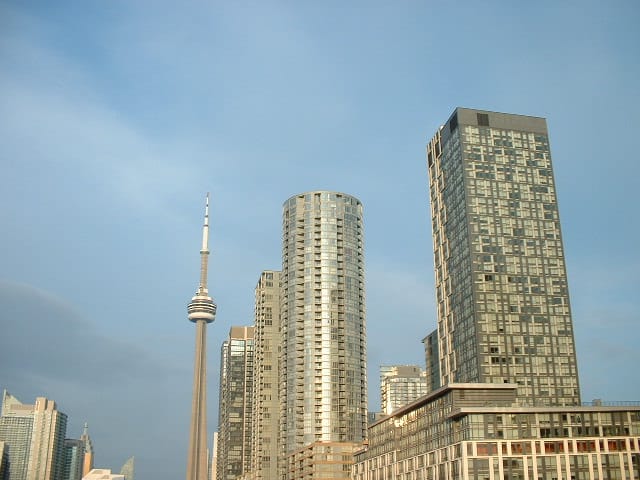
Living by the lake means walking to the Rogers Centre, Scotiabank Arena, the Harbourfront Centre and the waterfront trail. CityPlace and the waterfront are almost entirely glass condo towers, most built since the 2000s, with groceries, gyms and the streetcar at your door. It's a favourite with young professionals and people who want to walk to work.
| Feel | High-rise, very walkable, by the lake |
| Homes | Condos, mostly built since the 2000s |
| Great for | Young professionals, couples, walking to work |
| Avg. sold (Oct 2026) | 1-bed condo about $589,000 · 2-bed condo about $899,000 |
See homes: See condos for sale on the waterfront
King West and Liberty Village
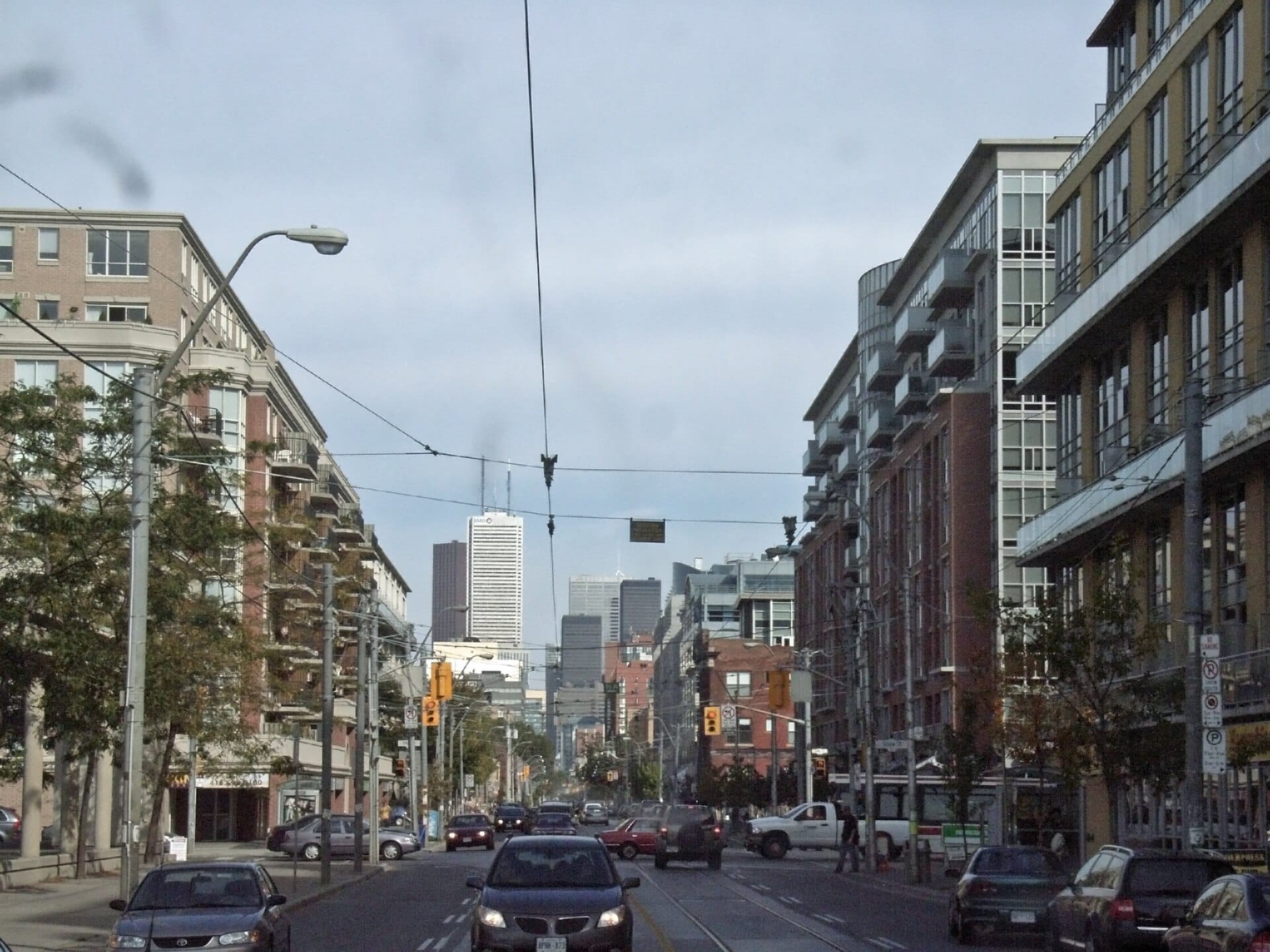
King West is where Toronto goes out: restaurants, rooftop patios, clubs and the Entertainment District next door. Old brick warehouses have become offices and lofts, surrounded by newer condos. Just west, Liberty Village is a young, busy neighbourhood of condos and converted factories, with tech offices, dog parks and the King streetcar and Exhibition GO station nearby.
| Feel | Busy, trendy, great nightlife |
| Homes | Condos, lofts and condo townhouses |
| Great for | Young professionals and people who love going out |
| Avg. sold (Oct 2026) | 1-bed condo about $564,000 · 2-bed condo about $767,000 · Condo townhouse about $925,000 |
See homes: See homes for sale in King West and Liberty Village
The Financial District and Yonge Street
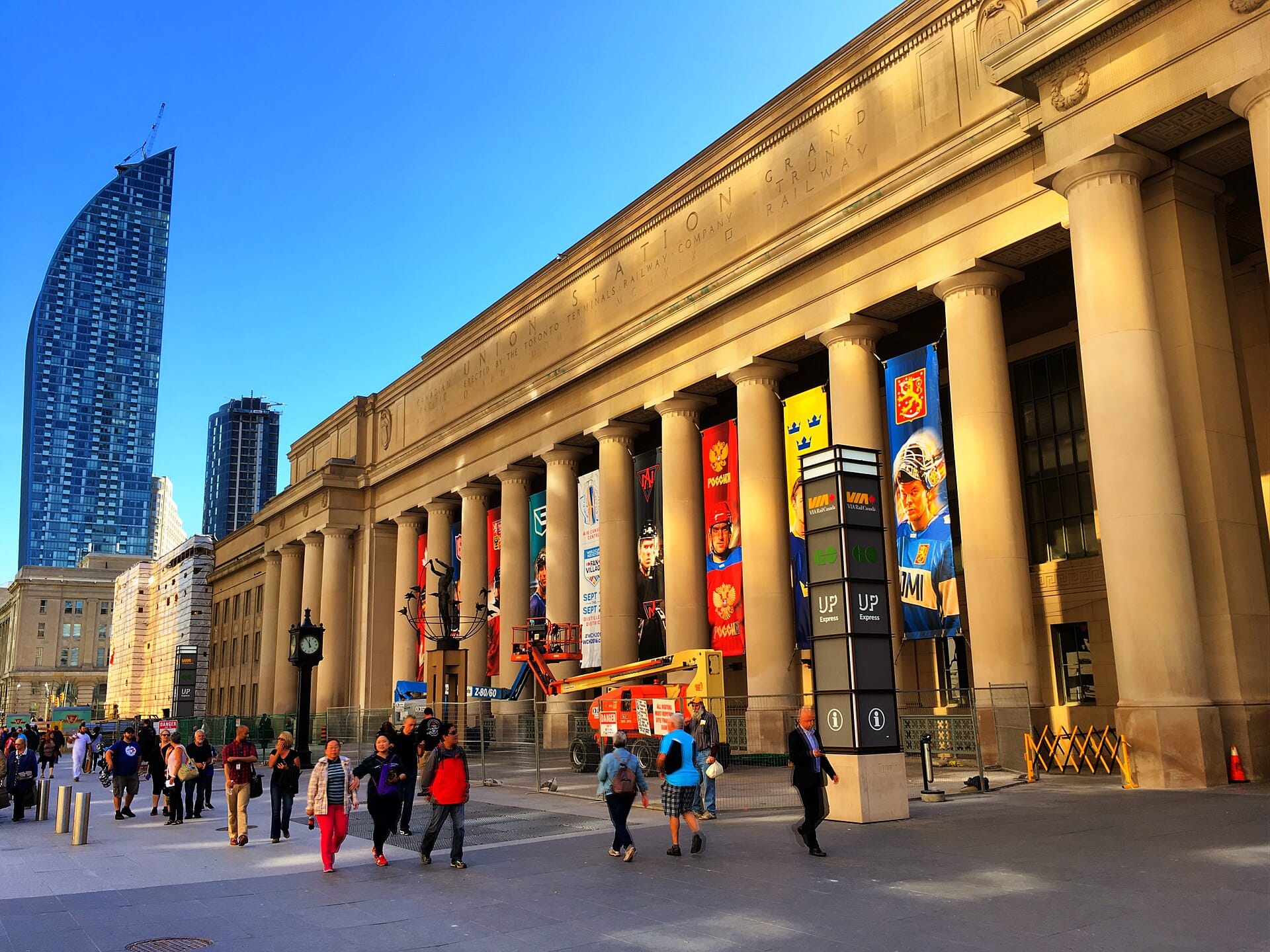
Around Bay Street and Union Station you're in Canada's financial capital. You can walk to work through the PATH, more than 30 km of underground walkways connecting offices, shops and transit, which is a lifesaver in January. North along Yonge and Church Streets you'll find Toronto Metropolitan University, the Eaton Centre and the Church-Wellesley Village, the heart of Toronto's LGBTQ+ community.
| Feel | The busiest, most central part of the city |
| Homes | Mostly condos |
| Great for | Walking to work, students, anyone who wants to be in the middle of it all |
| Avg. sold (Oct 2026) | 1-bed condo about $523,000 (Bay Street Corridor) · 1-bed about $512,000 and 2-bed about $690,000 (Church-Yonge Corridor) |
See homes: See homes for sale in the Church-Yonge Corridor
St. Lawrence Market and the Distillery District
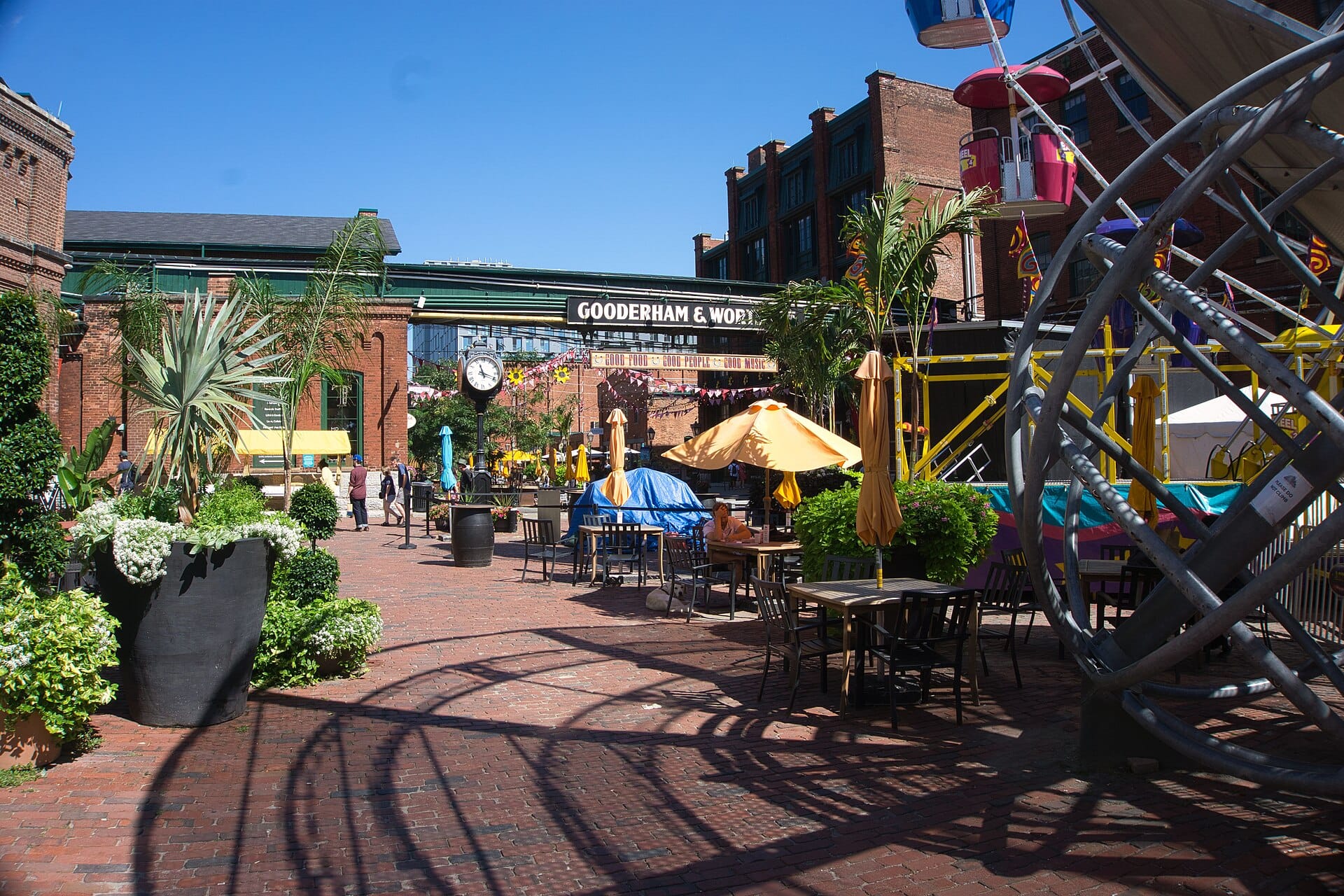
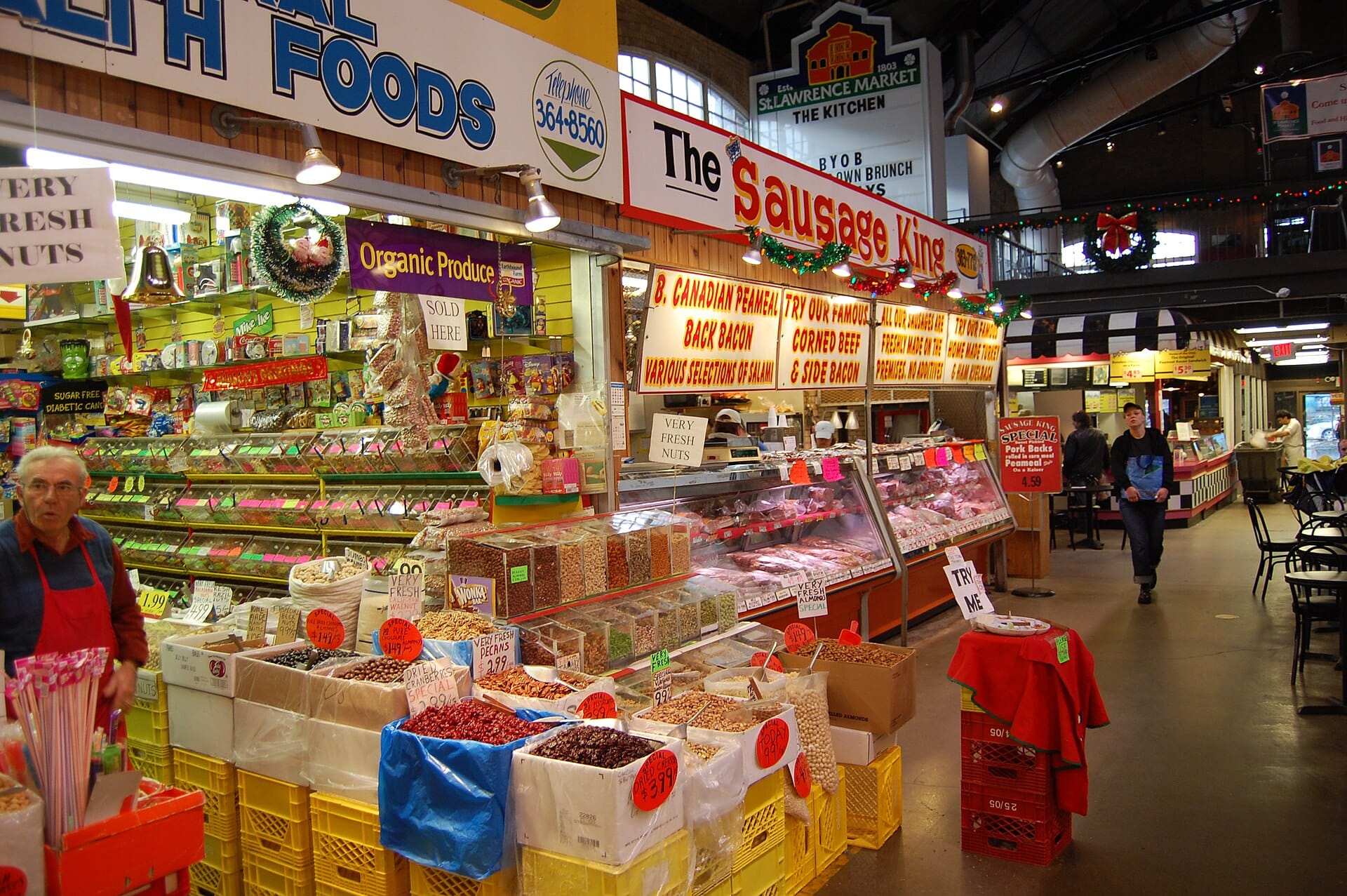
This is old Toronto at its most charming. St. Lawrence Market has been feeding the city for more than two centuries, and on Saturdays it's the best grocery run in Canada. A short walk east, the Distillery District's cobblestone lanes and restored brick buildings are full of galleries, cafés and the famous Christmas market. Homes are mostly mid-rise condos and some townhouses, and Corktown and the new waterfront neighbourhoods are next door.
| Feel | Historic, walkable, foodie heaven |
| Homes | Condos and freehold townhouses |
| Great for | Couples, downsizers and food lovers |
| Avg. sold (Oct 2026) | 1-bed condo about $505,000 · 2-bed condo about $763,000 · Freehold townhouse about $1,130,000 |
See homes: See homes for sale near St. Lawrence and the Distillery District


Kensington Market and Chinatown
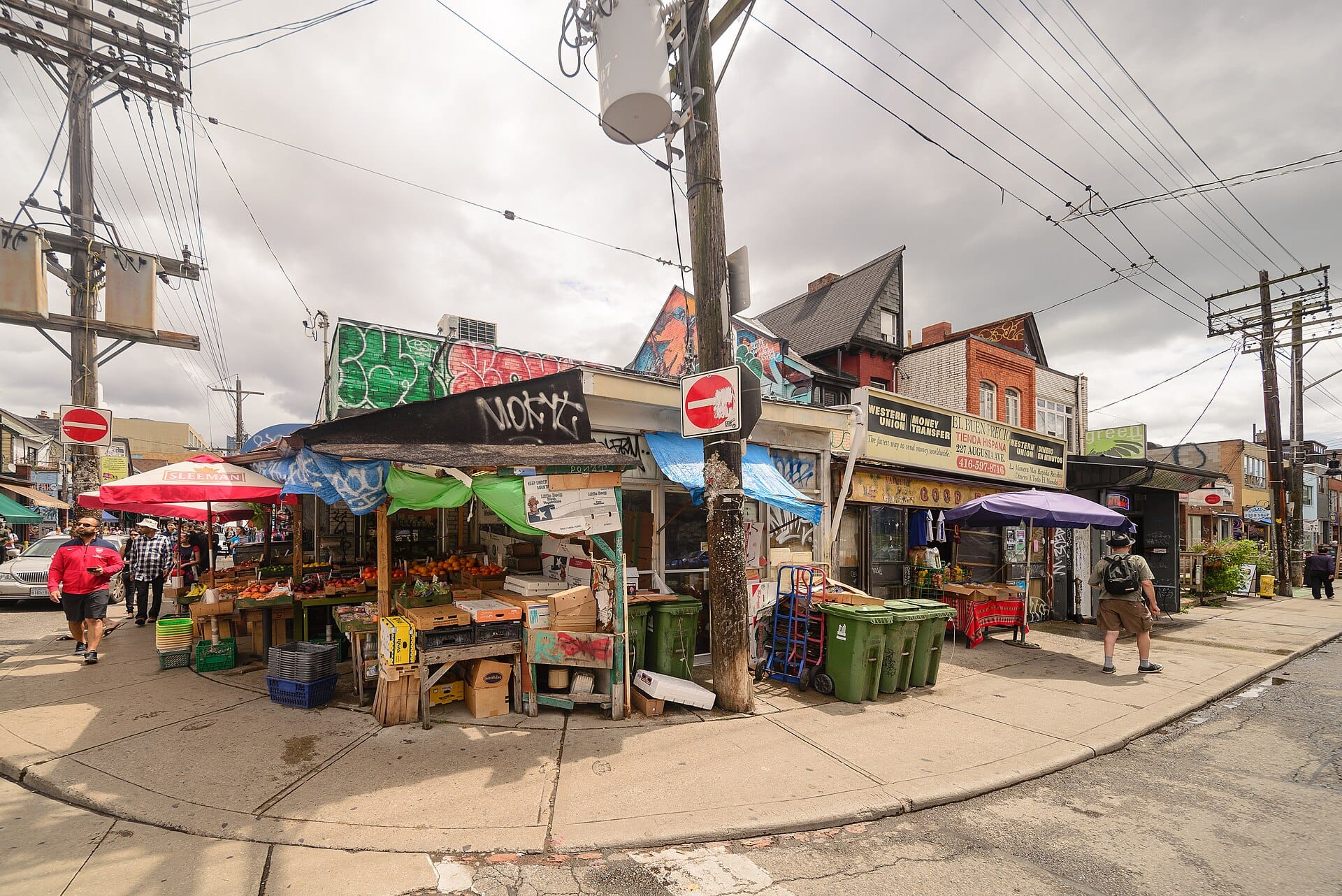
Kensington Market is Toronto's most colourful neighbourhood: vintage shops, cheese and spice stores, food from every corner of the world and Pedestrian Sundays in the summer. Spadina Avenue's Chinatown is right beside it. Homes are Victorian semis and row houses, plus condos, and the University of Toronto and the Art Gallery of Ontario are a short walk away.
| Feel | Bohemian, multicultural, always lively |
| Homes | Victorian semis and row houses, condos |
| Great for | Students, creatives, foodies |
| Avg. sold (Oct 2026) | Semi about $1,499,000 · 1-bed condo about $497,000 |
See homes: See homes for sale in Kensington and Chinatown
Queen West and Trinity Bellwoods
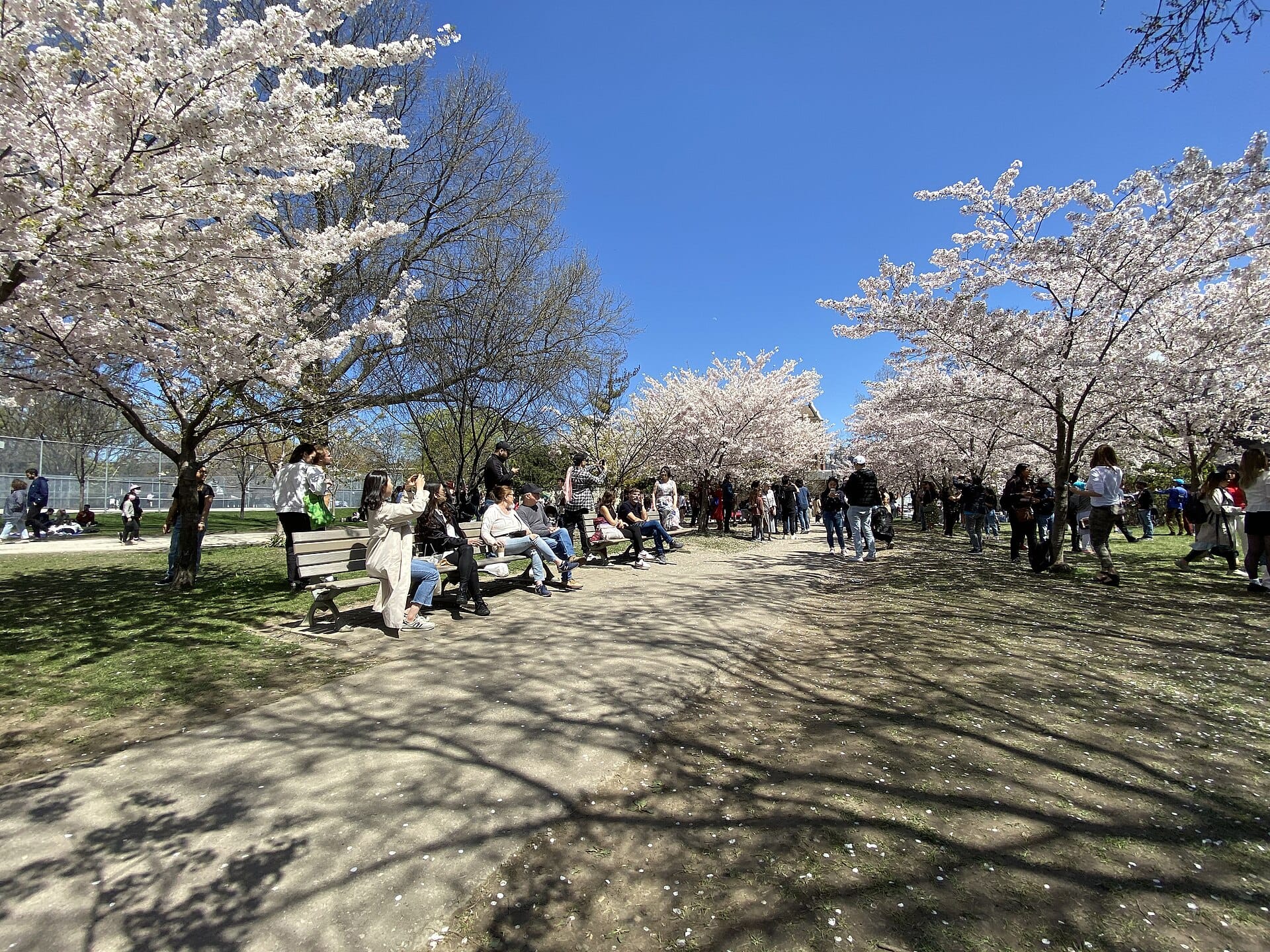
Trinity Bellwoods Park is Toronto's backyard on a summer Saturday, and Queen Street West around it is full of independent shops, galleries, coffee and some of the city's best restaurants. Side streets have Victorian and Edwardian semis and row houses, and Ossington Avenue and Dundas West are packed with bars and patios.
| Feel | Artsy, trendy, very walkable |
| Homes | Victorian semis, row houses and some condos |
| Great for | Young professionals and young families who want a house downtown |
| Avg. sold (Oct 2026) | Semi about $1,477,000 · 1-bed condo about $535,000 |
See homes: See homes for sale in Trinity Bellwoods
Little Italy and Little Portugal
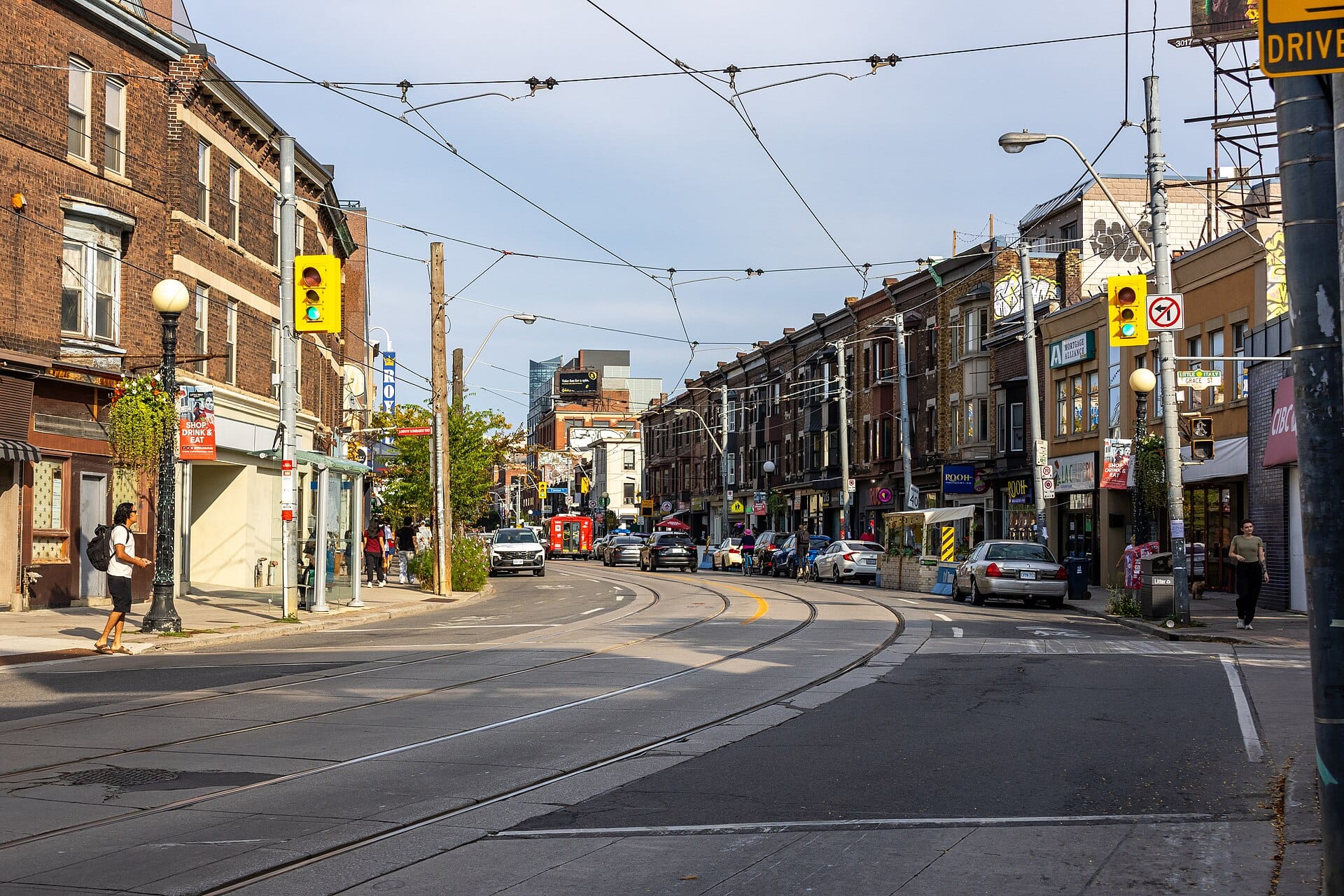
College Street's Little Italy is lined with cafés, gelato and patios that stay busy late, and Dundas Street West through Little Portugal has bakeries and some of the city's best new restaurants. The streets are full of semis and row houses built in the early 1900s, and the College and Dundas streetcars take you downtown.
| Feel | Neighbourly by day, lively at night |
| Homes | Semis, row houses and freehold townhouses |
| Great for | Couples and young families |
| Avg. sold (Oct 2026) | Little Italy: semi about $1,267,000, freehold townhouse about $1,492,000 · Little Portugal: semi about $1,005,000 |
See homes: See homes for sale in Little Italy
The Annex and Yorkville
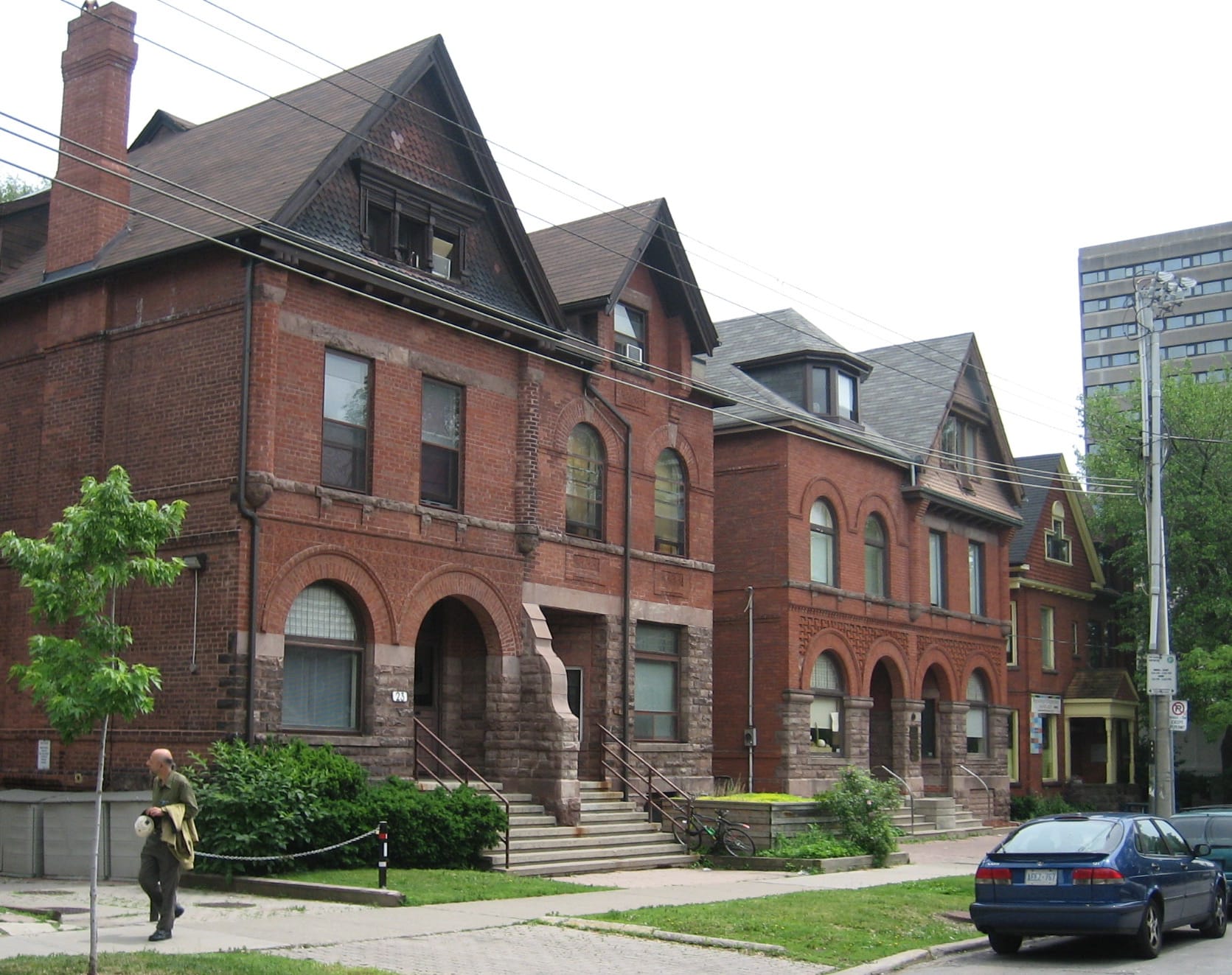
The Annex sits right beside the University of Toronto, with big Victorian homes (many split into apartments), Bloor Street's bookstores and pubs, and the subway along Bloor. Just east, Yorkville is Toronto's luxury shopping district, home to designer boutiques, high-end condos and the Royal Ontario Museum.
| Feel | Academic, leafy and walkable; Yorkville is upscale |
| Homes | Victorian detached and semis, condos |
| Great for | Academics, students, professionals |
| Avg. sold (Oct 2026) | Detached about $1,909,000 · Semi about $2,090,000 · 1-bed condo about $543,000 (The Annex) |
See homes: See homes for sale in The Annex
Rosedale
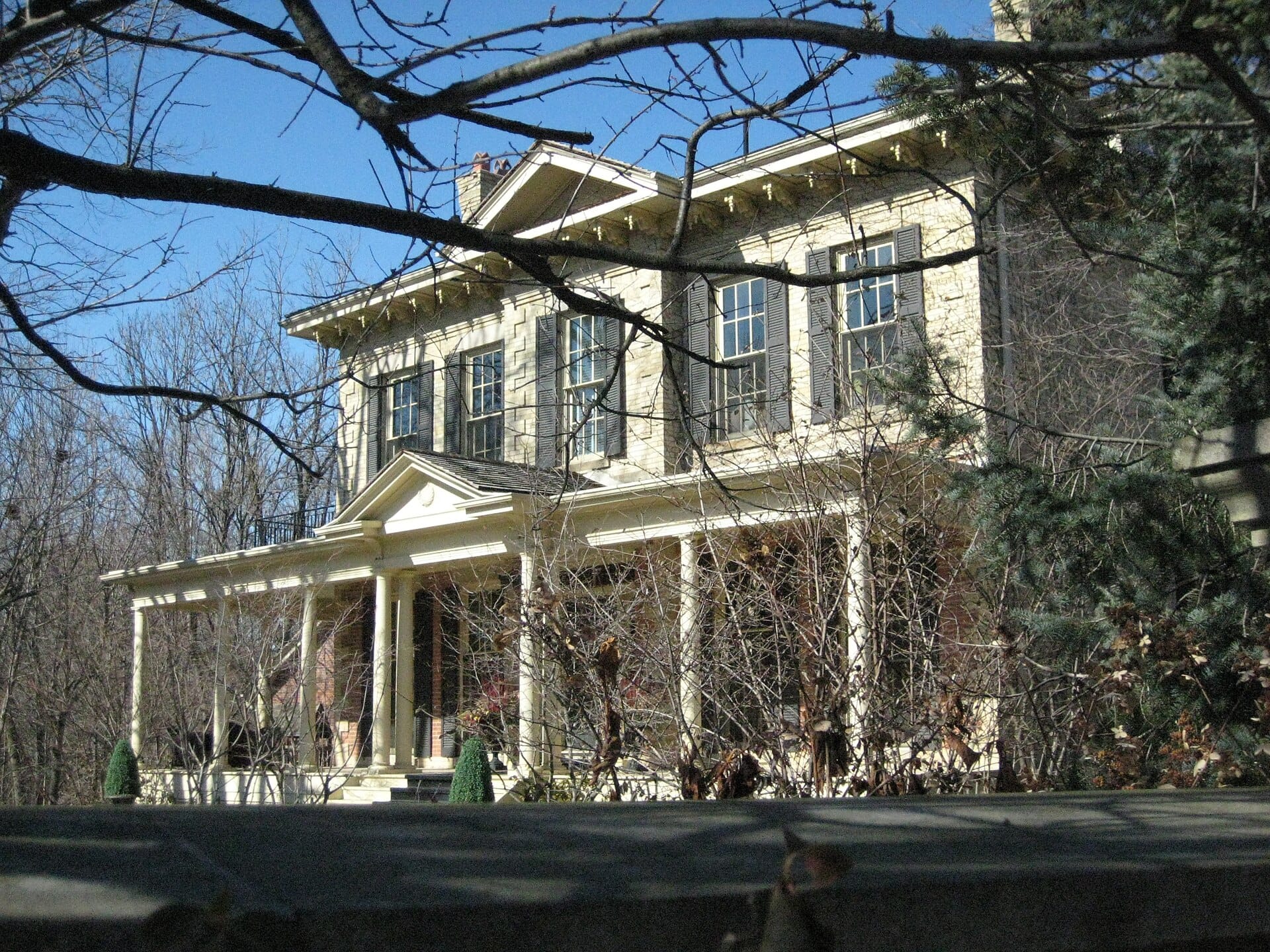
Rosedale is one of Canada's most prestigious neighbourhoods: grand detached homes on winding, tree-lined streets wrapped by ravines, yet only minutes from downtown on Line 1. Whitney Public School, one of the city's most consistent top-rated elementary schools, is here.
| Feel | Quiet, prestigious, green |
| Homes | Large detached homes, some semis and luxury condos |
| Great for | Families who want space close to downtown |
| Avg. sold (Oct 2026) | Detached about $3,888,000 · Semi about $2,511,000 · 1-bed condo about $620,000 (Rosedale-Moore Park) |
See homes: See homes for sale in Rosedale
Leslieville
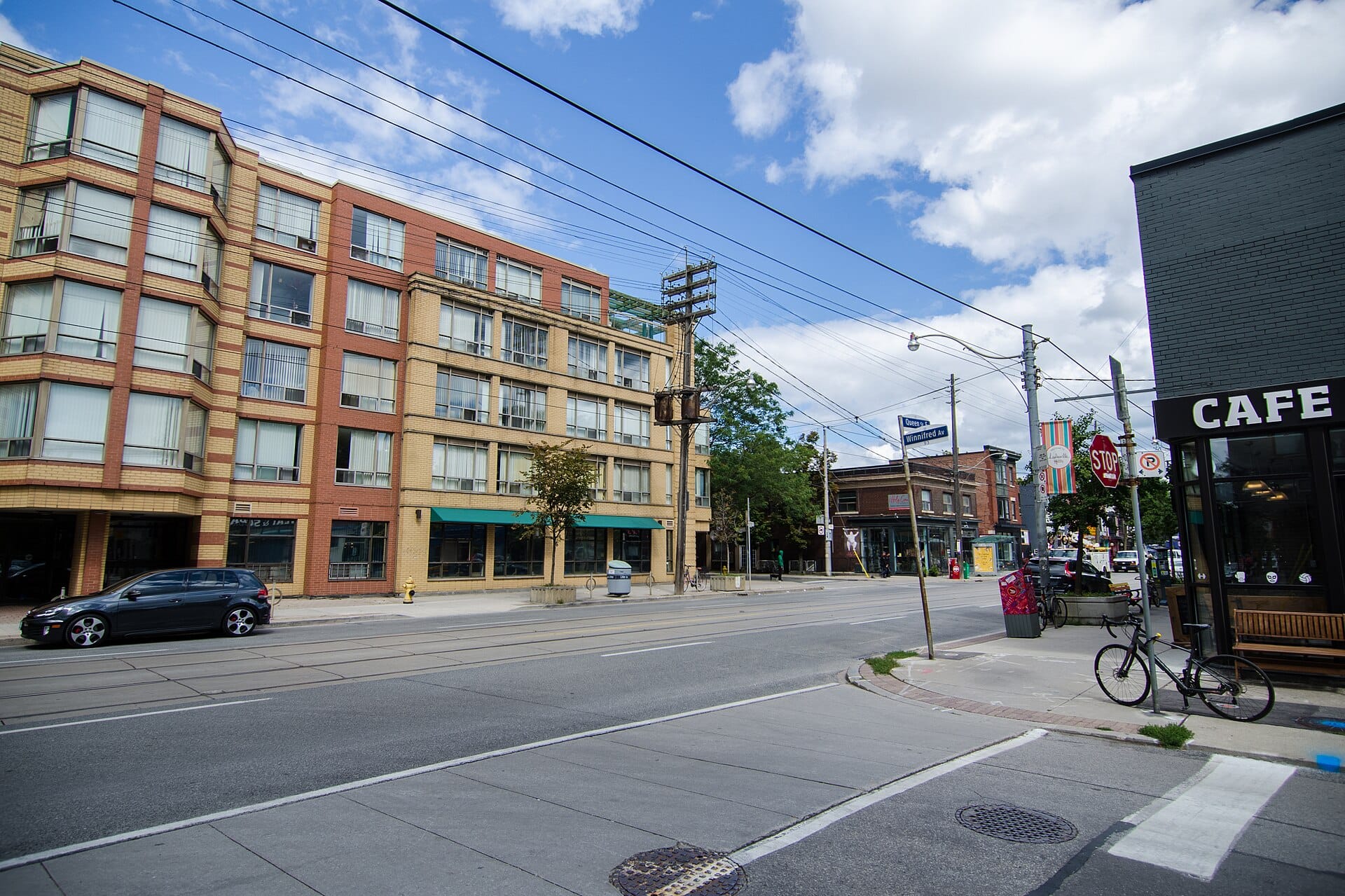
Leslieville in the east end is where a lot of young families land when they want a house close to downtown. Queen Street East has brunch spots, bakeries and shops, and the side streets have small Victorian and worker's cottages, semis and newer townhouses. The Queen streetcar gets you downtown in about 20 minutes.
| Feel | Family-friendly, relaxed, walkable |
| Homes | Semis, row houses, townhouses and some detached |
| Great for | Young families |
| Avg. sold (Oct 2026) | Detached about $1,508,000 · Semi about $1,251,000 · Freehold townhouse about $1,193,000 (South Riverdale) |
See homes: See homes for sale in Leslieville
Downtown Toronto map
Downtown Toronto. Open in Google Maps
Midtown and family neighbourhoods
If you want more space, a backyard and top-rated schools, most families look a little north or east of downtown: Leaside, Lawrence Park, Riverdale, The Beaches, High Park, Bloor West Village and The Kingsway. I compare all of them, with schools, lot sizes and recent prices, in my guide to the best neighbourhoods in Toronto. For schools, see my best elementary and middle schools and best high schools in Toronto rankings.
Beyond downtown: the inner suburbs and the GTA
North York, Etobicoke and Scarborough give you more space for your money, with bigger lots, ravines and condo hubs along the subway. Further out, Mississauga, Oakville, Brampton, Vaughan and Markham have newer homes and good schools, and GO trains run into Union Station. If you work downtown, it's worth comparing a commute from the 905 with the price of a smaller home in the city.
What it costs to live in Toronto
Housing is the biggest cost by far. Here are the key numbers; for the full breakdown, read my cost of living in Toronto guide.
| Cost | 2026 figure |
|---|---|
| Average rent, 1-bedroom condo | $2,382/month (Q3 2026) |
| Average rent, 2-bedroom condo | $3,198/month (Q3 2026) |
| Average condo apartment price | $659,214 (Oct 2026) |
| Average semi-detached price | $1,225,229 (Oct 2026) |
| Average detached price | $1,603,886 (Oct 2026) |
| TTC monthly fare cap (adult) | $155.10 |
| Property tax rate | 0.767311% of assessed value |
| Licensed child care (under 6) | Capped at $22/day |
Prices change a lot by home type and neighbourhood, so always compare like with like. See the latest Toronto house prices by home type.
Jobs and the economy
Toronto is Canada's business capital. Bay Street is home to the Toronto Stock Exchange and the head offices or main operations of Canada's biggest banks, insurers and investment firms. Tech is huge too, from big U.S. companies' Canadian offices to start-ups in Liberty Village and the MaRS Discovery District. The city is also one of North America's biggest film and TV production centres, and its hospitals and universities (the University of Toronto, Toronto Metropolitan University, York University and OCAD) employ tens of thousands of people.
Getting around Toronto
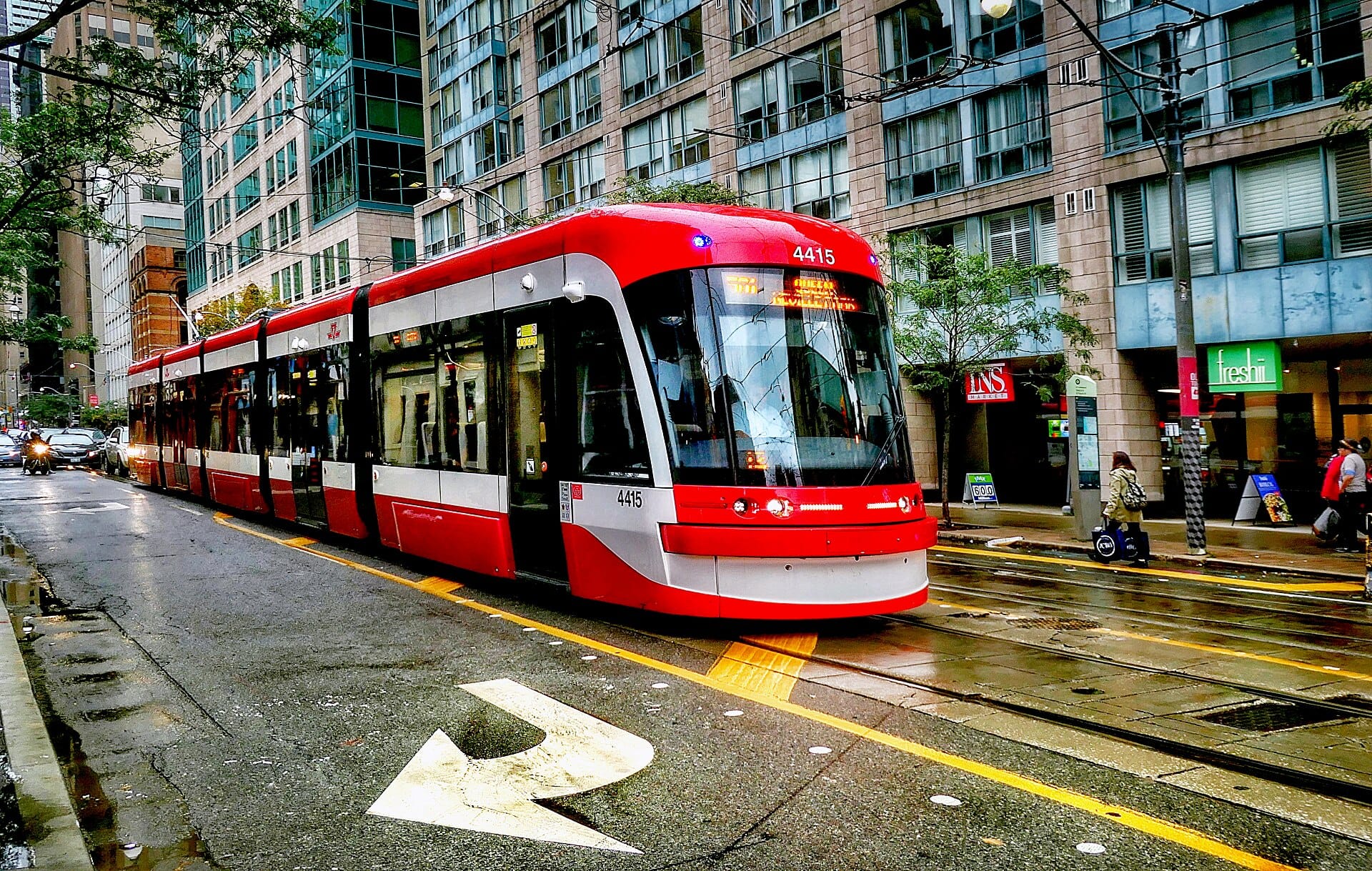
The TTC runs the subway, streetcars and buses. The main lines are Line 1 (Yonge-University), Line 2 (Bloor-Danforth), Line 4 (Sheppard), Line 5 (Eglinton) and Line 6 (Finch West). An adult fare is $3.30 with PRESTO, and since September 1, 2026 the monthly fare cap means that after 47 paid rides in a month the rest are free, so adults never pay more than $155.10 a month.
Downtown, the PATH lets you walk underground between Union Station, the office towers and shopping. GO Transit trains and buses connect Toronto with the rest of the GTA, the UP Express gets you from Union to Pearson Airport in about 25 minutes, and Bike Share Toronto has stations all over the core.
Weather and seasons
Toronto has four real seasons. Winters (December to March) are cold, with snow and plenty of days below freezing, so a good coat, boots with grip and winter tires if you drive make a big difference. Summers are warm and often humid, with highs in the high 20s°C. Spring and fall are short but beautiful, especially when the cherry blossoms bloom in High Park and the ravines change colour in October.
Life in Toronto: what you'll love
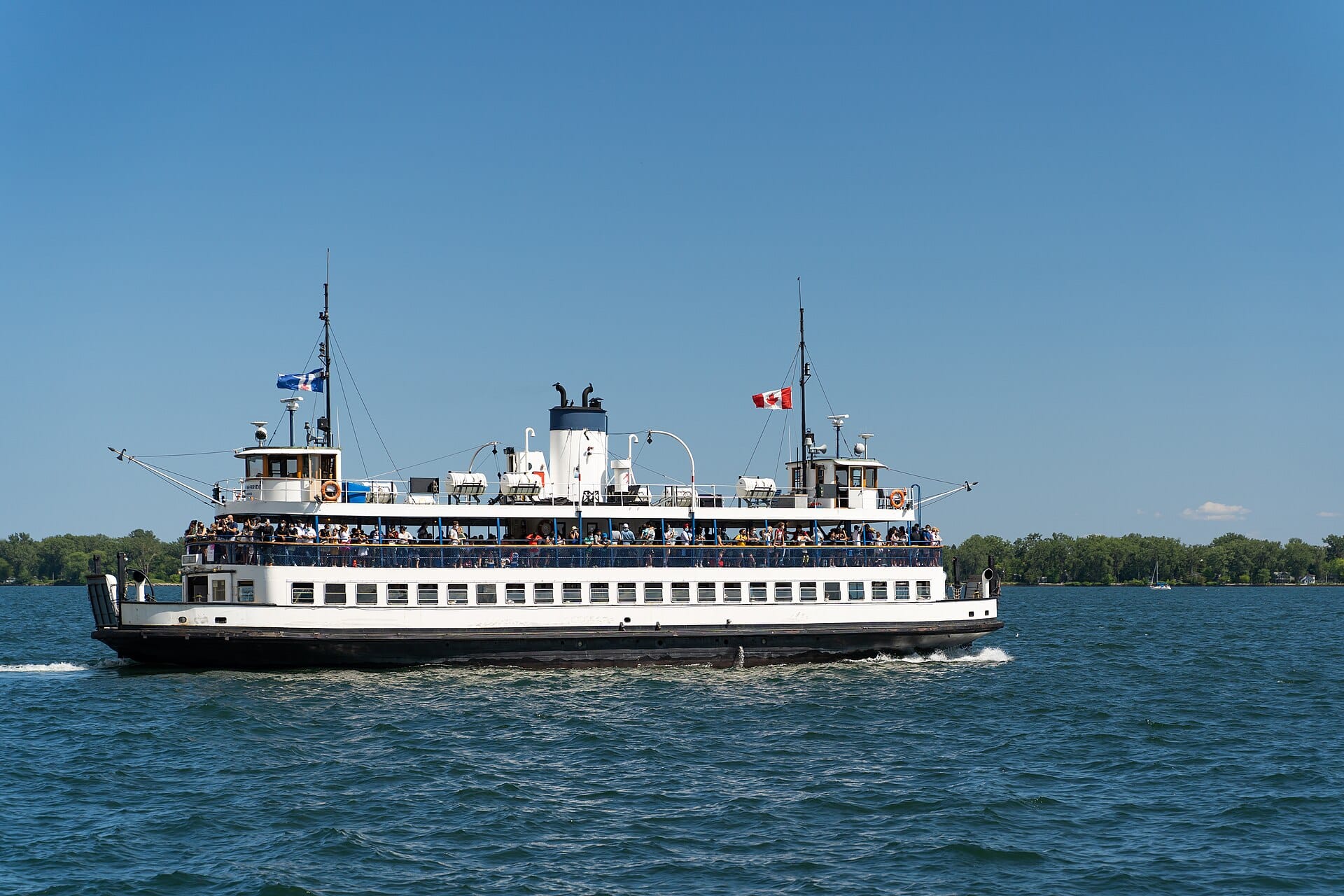
- The lake: take the ferry from the Jack Layton Ferry Terminal to the Toronto Islands for beaches, biking and the best skyline view in the city.
- Food: St. Lawrence Market, Kensington Market, Chinatown, Little Italy, Greektown on the Danforth, and some of the best Indian, Caribbean and East Asian food in North America.
- Sports: the Maple Leafs, Raptors, Blue Jays, Toronto FC and Argonauts all play downtown.
- Festivals: TIFF in September, the Toronto Caribbean Carnival and Pride in the summer, the CNE in late August and Nuit Blanche in the fall.
- Culture: the Royal Ontario Museum, the Art Gallery of Ontario, theatre in the Entertainment District and live music every night of the week.
- Green space: High Park, the ravine trails, the Don Valley, Evergreen Brick Works and the Scarborough Bluffs.
Renting vs. buying when you arrive
Many people rent for their first year so they can get to know the city before buying. That's a smart move if you're not sure which neighbourhood fits, or if your job location might change. If you already know where you want to be and your down payment is ready, buying right away means you start building equity sooner instead of paying rent. Either way, visit a neighbourhood on a weekday evening and a Saturday morning; it can feel completely different.
If you're buying: your checklist
- Get pre-approved for a mortgage so you know your real budget.
- Know your income target. See how much income you need to buy a house in Toronto.
- Budget for closing costs. In Toronto you pay both the Ontario and the Toronto land transfer tax. First-time buyers can get rebates of up to $4,000 on the Ontario tax and up to $4,475 on the Toronto tax. Use my Toronto land transfer tax calculator.
- Buying a condo? Have your lawyer review the status certificate, and check the monthly fees and what they cover.
- Check school boundaries for the exact address with the TDSB or TCDSB.
- Book a home inspection and line up a real estate lawyer for the closing.
Moving to Toronto checklist
- Set your budget for renting or buying, including moving costs.
- Shortlist two or three neighbourhoods near your work or school.
- Book movers early. The end of the month and the summer fill up fast.
- Moving into a condo? Book the elevator and ask about move-in rules and deposits.
- Set up hydro, internet and tenant or home insurance before you arrive.
- Get a PRESTO card for the TTC and GO Transit.
- Update your address, and if you're coming from another province, switch your health coverage and driver's licence through ServiceOntario.
- Register your kids for school once you have your address.
- Get a library card. The Toronto Public Library is one of the busiest in the world and it's free.
Moving to Toronto and selling a home first?
Your current home is usually your biggest down payment. Find out what it's worth today, free and with no obligation.
Get my free home evaluation →Moving to Toronto FAQ
Is moving to Toronto worth it?
For a lot of people, yes. Toronto has Canada's biggest job market, top universities and hospitals, the lake, and neighbourhoods for every lifestyle, from downtown condos to quiet streets with big backyards. The trade-off is cost, so picking the right type of home and the right neighbourhood matters more here than almost anywhere else in Canada.
What is the best downtown Toronto neighbourhood to live in?
It depends on your lifestyle. King West and Liberty Village suit young professionals who want restaurants and nightlife, St. Lawrence and the Distillery District are great if you want a walkable, historic feel, The Annex suits students and academics near the University of Toronto, and Leslieville and Trinity Bellwoods are popular with young families who want a house and a neighbourhood feel close to downtown.
How much does a condo cost in downtown Toronto?
In October 2026, average sold prices for a 1-bedroom condo in the main downtown areas ranged from about $497,000 in Kensington-Chinatown to about $589,000 along the waterfront, and about $620,000 in Rosedale-Moore Park. Two-bedroom condos were roughly $690,000 to $900,000 in most downtown areas.
How much money do I need to move to Toronto?
If you are renting, plan for first and last month's rent (an average 1-bedroom condo rented for $2,382 a month in Q3 2026), movers and a few months of living costs. If you are buying, you need your down payment plus closing costs, including both the Ontario and the Toronto land transfer tax.
Do I need a car in Toronto?
Not if you live downtown or near a subway line. The TTC, GO Transit, Bike Share Toronto and the PATH underground walkway make car-free living easy in the core. In the inner suburbs, many families keep at least one car.
Should I rent or buy when I move to Toronto?
Many people rent for the first year to learn the neighbourhoods before buying. If you already know where you want to live and have your down payment ready, buying sooner means you start building equity instead of paying rent.