
Condo vs Townhouse in Toronto: Which Should You Buy?
Condo or townhouse? How each one feels to live in, what they cost in Toronto by home type, freehold vs condo townhouses, and the questions to ask before you buy.
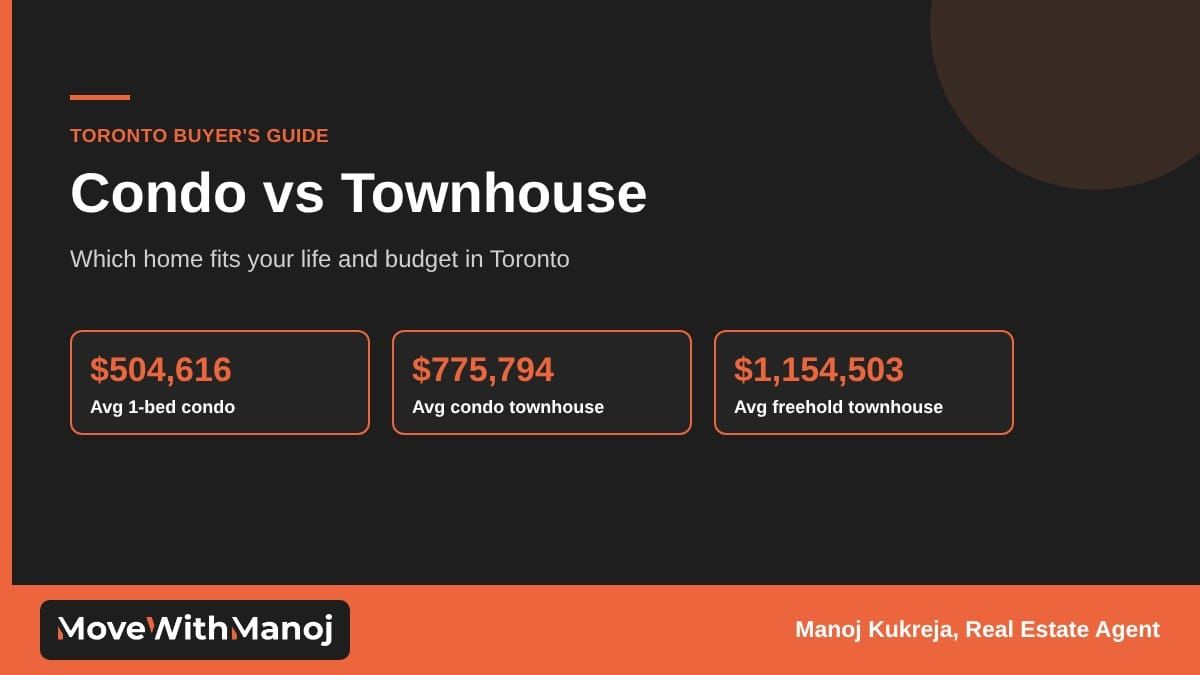

If you're house hunting in Toronto, the condo vs townhouse question usually comes up in the first week. I hear it all the time from first-time buyers, young families and people who are tired of renting. And it's a good question, because the answer changes how you'll live every single day: how many stairs you climb, where the kids play, how loud your neighbours are and how much you pay each month.
I'll walk you through what each one is really like to live in first, and then we'll get to the numbers. Before real estate I spent more than a decade working in financial planning, so I'll show you the money side honestly too.
Want to look while you read? See every condo for sale in Toronto or every townhouse for sale in Toronto.
In this guide
- The short answer
- What's the difference?
- What each one is like to live in
- Toronto's most famous condo buildings
- Toronto prices by home type
- Monthly costs beyond the mortgage
- Freehold vs condo townhouse
- Stacked townhouses
- Resale and long-term value
- Which one fits you?
- What to check before you buy
- Condo vs townhouse FAQ
The short answer
A condo apartment is usually the most affordable way into the Toronto market, with less upkeep and often a better location for the money. A townhouse gives you more space, your own front door, more privacy and usually some outdoor space, but it costs more to buy. If you can stretch to a townhouse and you plan to stay five years or more, many families find it's the better fit. If you want the lowest price, the shortest commute and the least maintenance, a condo often wins.
What's the difference?
This is the part that confuses most people: "condo" is a type of ownership, and "townhouse" is a style of building. So a townhouse can be a condo, or not. In Toronto you'll see three main options:
- Condo apartment: a unit in a low-rise or high-rise building. You own your unit and share the hallways, lobby, amenities and land with everyone else. You pay a monthly maintenance fee.
- Condo townhouse: a multi-level home in a row of townhouses that's part of a condo corporation. You own your unit and pay a monthly fee that usually covers some exterior upkeep and common areas.
- Freehold townhouse: you own the house and the land it sits on, outright. No condo fees and no condo board, but every repair is yours.
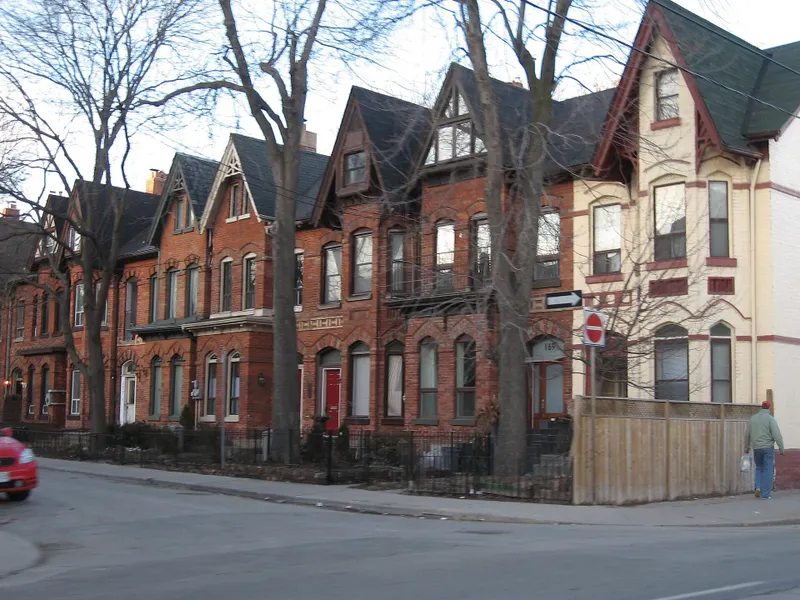
Photo: Bardiak at English Wikipedia, public domain, via Wikimedia Commons
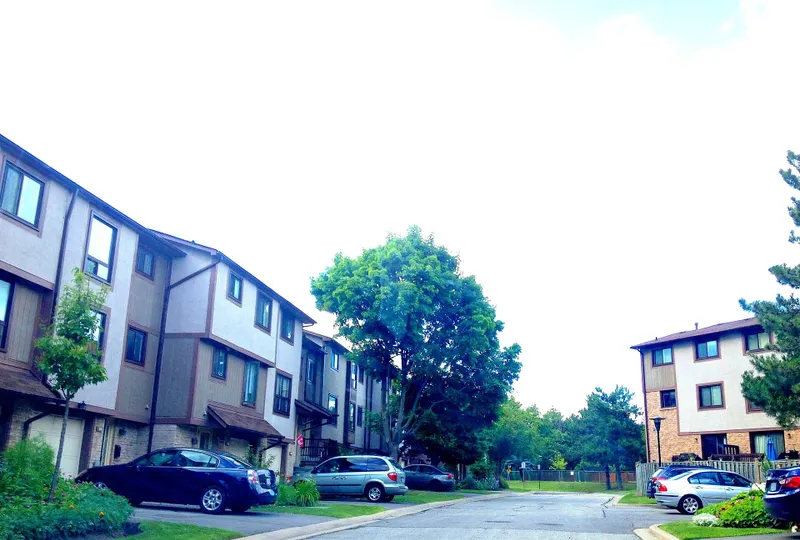
Photo: ChadPerez49, CC BY-SA 4.0, via Wikimedia Commons
What each one is like to live in
Life in a condo
Condo living is simple. You lock the door and go. There's no lawn to cut and no snow to shovel, and many buildings have a gym, a concierge, a party room and parcel lockers. You're often closer to the subway, work and restaurants than you could afford in a house. The trade-offs: less space, shared walls, ceilings and floors, elevator waits, building rules (pets, renovations, short-term rentals), and usually one parking spot if any.
Life in a townhouse
A townhouse feels much more like a house. You have your own entrance, usually two or three floors, often a garage or driveway, and a small yard, patio or rooftop terrace. Kids can play outside, the dog has a door to the backyard, and you hear far less of your neighbours. The trade-offs: more stairs (a big deal with a stroller or as you get older), a higher price, and more upkeep, especially with a freehold.


Toronto's most famous condo buildings
When people picture condo life in Toronto, these are the buildings they usually have in mind. You don't need to live in an icon to enjoy the lifestyle, but they show what downtown condo living can look like at its best: the views, the amenities and everything right outside the lobby.
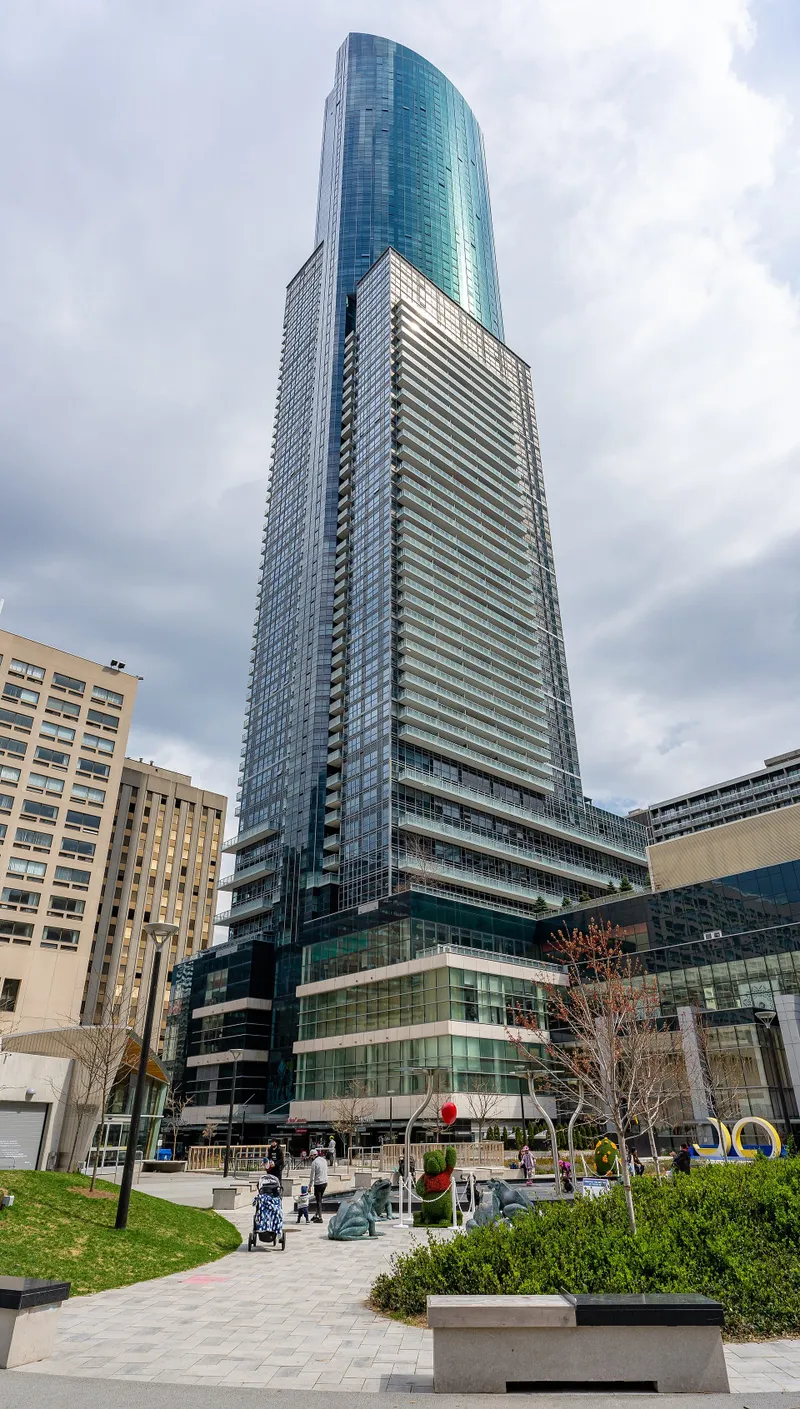
Photo: Maksim Sokolov (maxergon.com), CC BY-SA 4.0, via Wikimedia Commons
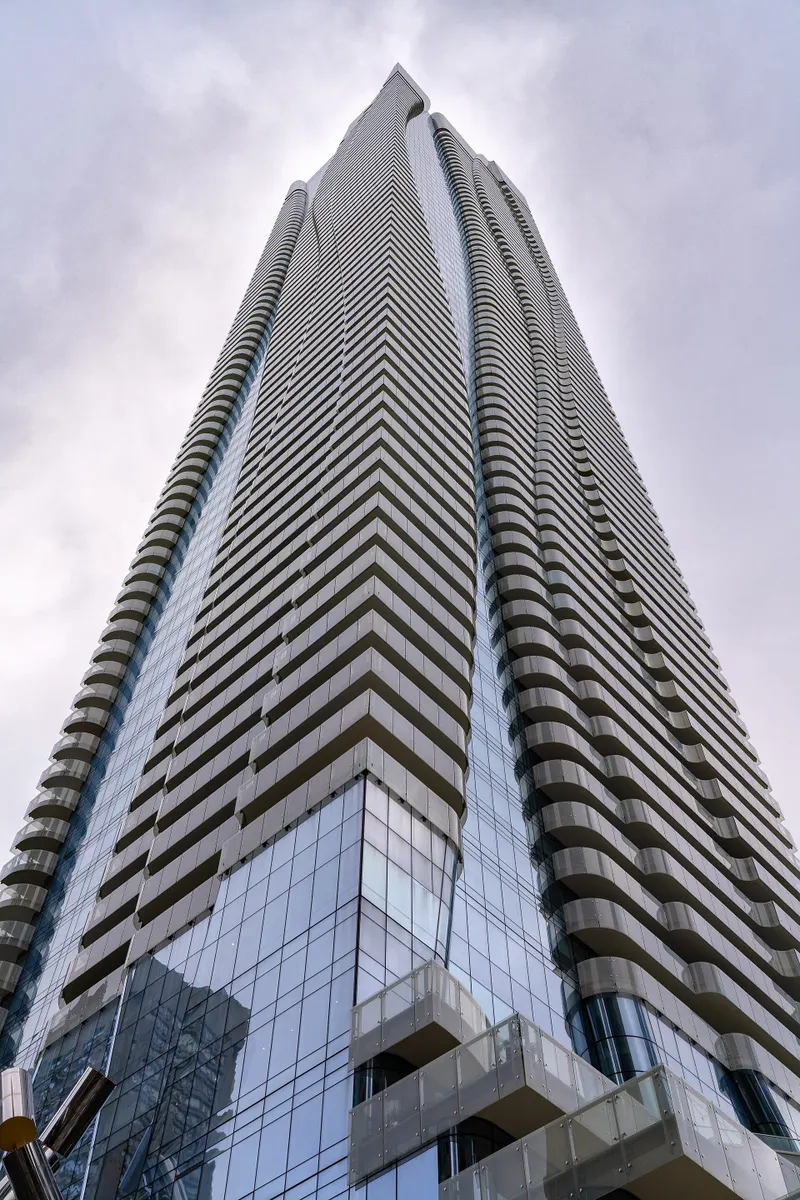
Photo: Maksim Sokolov (Maxergon), CC BY-SA 4.0, via Wikimedia Commons
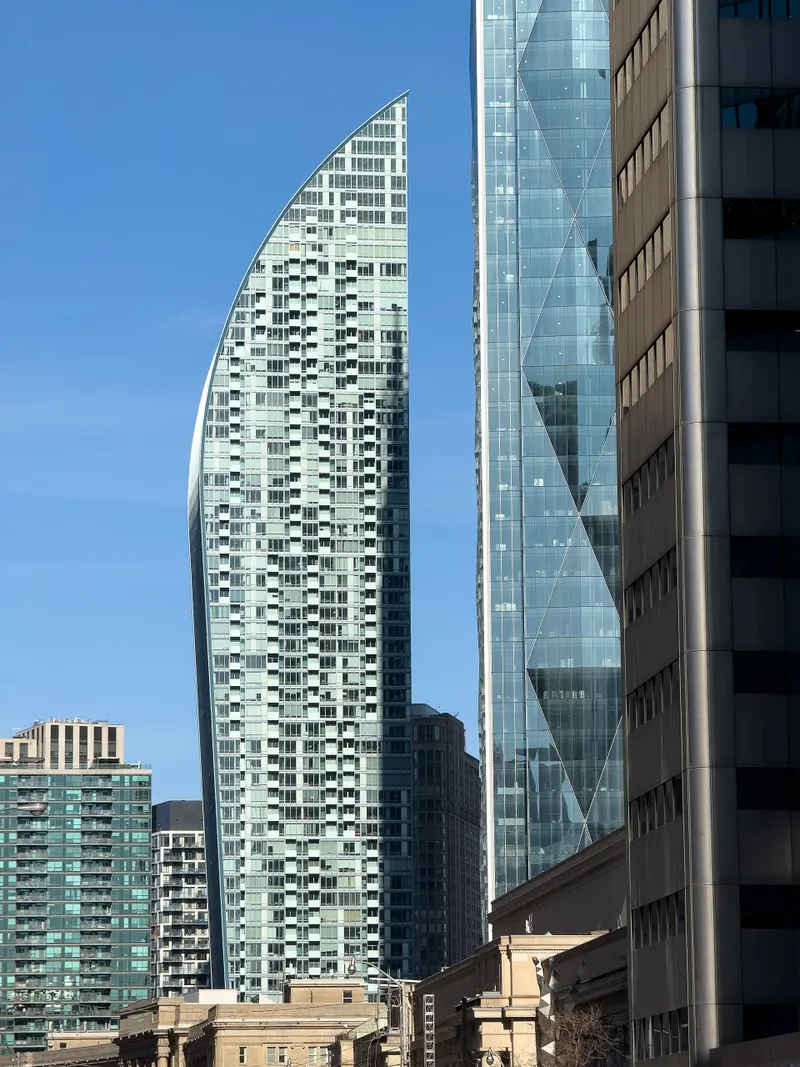
Photo: JK Liu, CC BY-SA 4.0, via Wikimedia Commons
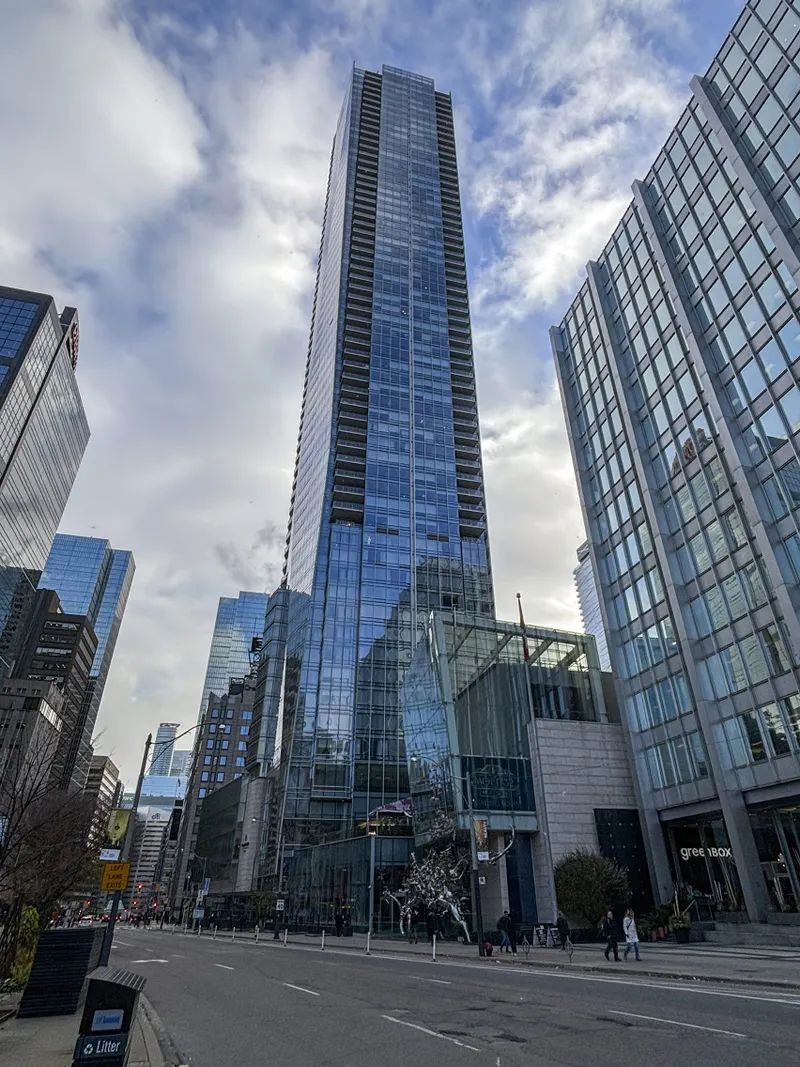
Photo: Canmenwalker, CC BY 4.0, via Wikimedia Commons

Photo: Chris Woodrich, CC BY-SA 4.0, via Wikimedia Commons
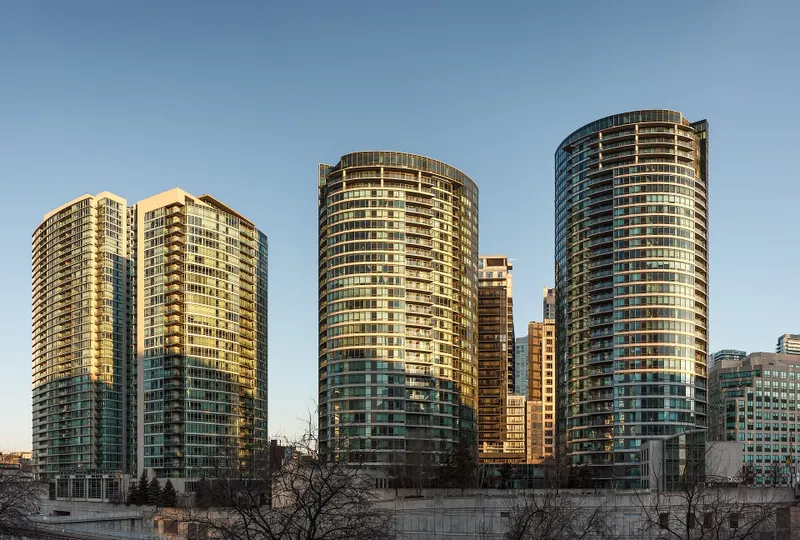
Photo: Kim Hansen, CC BY-SA 4.0, via Wikimedia Commons
Prices in buildings like these vary a lot by floor, view and size, so always compare units in the same building and check the condo fees before you fall in love with the view.
Toronto prices by home type
Prices in Toronto change a lot by home type, so it's not helpful to look at one "average home price." Here's what each type sold for on average over the last 12 months, from my Toronto listings page (figures as of November 2026):
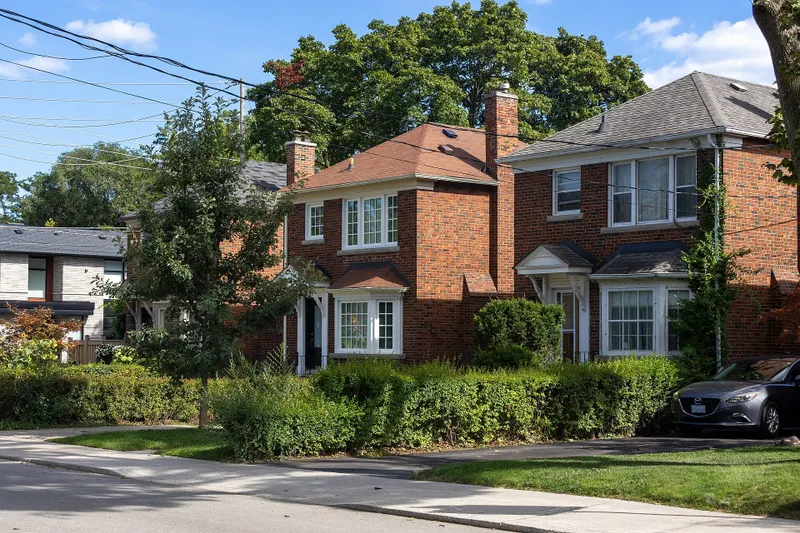
Photo: Dillan Payne, CC BY-SA 4.0, via Wikimedia Commons
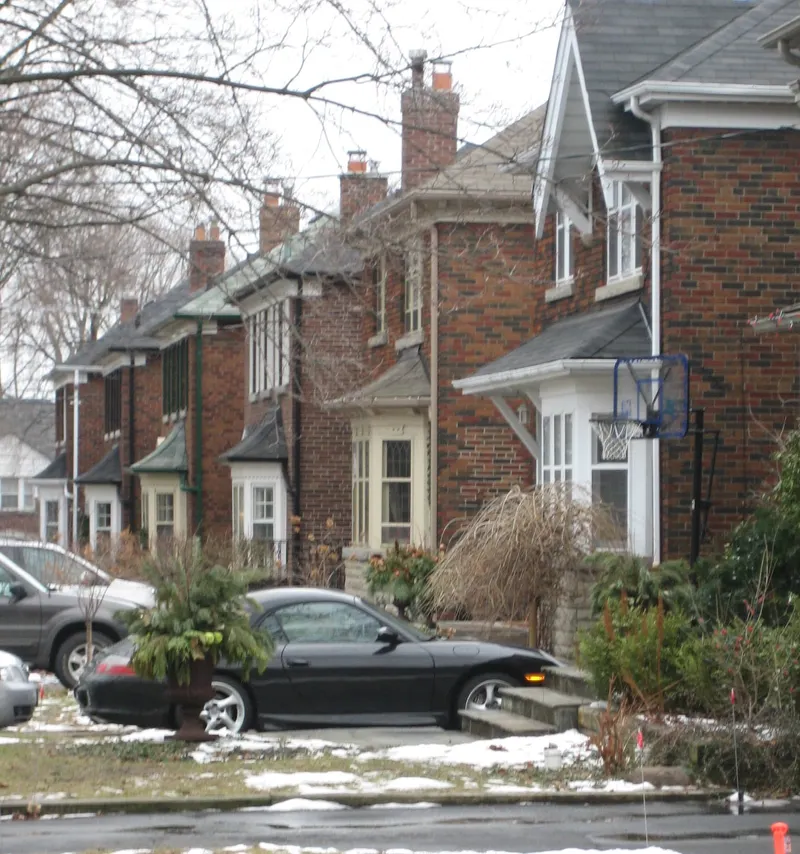
Photo: SimonP, CC BY-SA 4.0, via Wikimedia Commons
| Home type | Average price (last 12 months) | Average monthly maintenance fee |
|---|---|---|
| 1-bedroom condo apartment | $504,616 | $615 |
| 2-bedroom condo apartment | $767,303 | $997 |
| Condo townhouse | $775,794 | $664 |
| Freehold townhouse | $1,154,503 | None |
| Semi-detached (for comparison) | $1,204,460 | None |
For this month's numbers, see my Toronto housing market stats. Prices also vary hugely by neighbourhood, so a condo townhouse in North York or Scarborough can cost far less than one downtown.
Monthly costs beyond the mortgage
The purchase price is only half the story. Here's what Toronto owners paid on average in property tax and condo fees over the last 12 months:
| Home type | Average property tax per year | Average maintenance fee per month |
|---|---|---|
| 1-bedroom condo apartment | $3,790 | $615 |
| 2-bedroom condo apartment | $4,418 | $997 |
| Townhouse (freehold and condo combined) | $5,801 | $0 freehold / $664 condo townhouse |
A few things I always tell my buyers:
- Condo fees aren't wasted money. They usually cover things you'd pay for anyway, like building insurance, exterior repairs, snow removal and sometimes heat or water. Check exactly what's included.
- Freehold has no fee, but it isn't free. A roof, furnace, windows or driveway will come due eventually. Set money aside every month as if you were paying a fee to yourself.
- Fees affect what you can borrow. Lenders count part of your condo fee when they work out your mortgage approval, so a $1,000 fee can noticeably shrink your budget.
To see how much income you'd need for each home type, read how much income you need to buy a house in Toronto, Mississauga and Oakville. And don't forget Toronto charges two land transfer taxes; my Toronto land transfer tax calculator shows your exact number.
Freehold vs condo townhouse
If you've decided on a townhouse, this is your next choice. A freehold townhouse costs more up front but has no monthly fee, no board approval for changes and no risk of a special assessment. You can paint the front door any colour you like. A condo townhouse costs less to buy and someone else handles shared work like landscaping and sometimes roofs and windows, but you pay a monthly fee and follow the corporation's rules.
You'll also see POTL townhouses (parcel of tied land) in newer GTA communities: you own your house and land like a freehold, but pay a small monthly fee for a shared private road or common area. Always ask exactly what you own and what the fee covers.
Stacked townhouses
Stacked townhouses are two-storey units built one on top of another, usually as condos. They're a nice middle ground: your own front door, often a terrace, and a price closer to a condo apartment. Just know that you'll share a floor or ceiling with the unit above or below, parking is often underground, and there can be a lot of stairs.
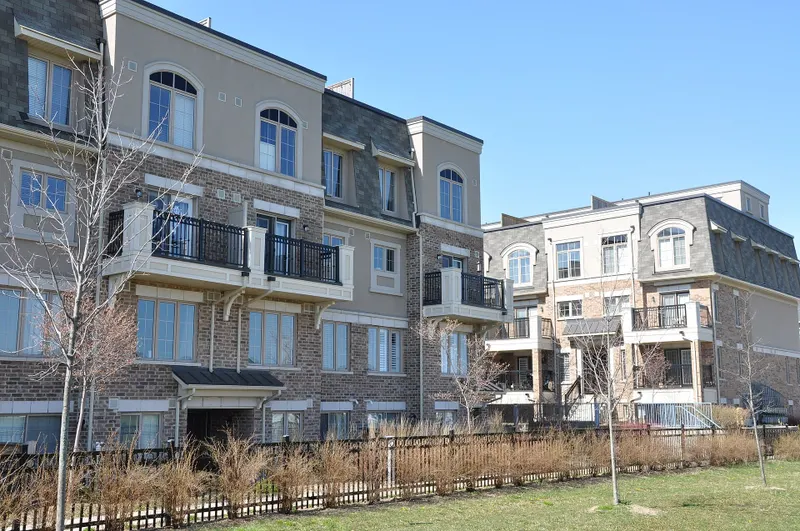
Photo: Luka0188, CC BY-SA 4.0, via Wikimedia Commons
Resale and long-term value
Over the last few years, Toronto homes that come with land, including freehold townhouses, have generally held their value better than condo apartments, where there's been a lot of new supply. That doesn't mean condos are a bad buy. For many first-time buyers, a condo is the step that gets them into the market and builds the equity for their next move. What matters most for resale is the building's reputation, the layout, parking, the neighbourhood and transit, more than the label on the listing.
Which one fits you?
A condo may suit you if you're buying your first home on one income, you want to live close to work or the subway, you travel a lot, you don't want to deal with repairs, or you're downsizing and want one-floor living.
A townhouse may suit you if you have kids or plan to soon, you have a dog, you work from home and need a separate office, you want outdoor space and a garage, or you plan to stay put for at least five years.
What to check before you buy
- Status certificate (any condo or condo townhouse): have your lawyer review it. It shows the reserve fund, the budget, any lawsuits and any planned special assessments.
- Fee history: ask how much the fees have gone up over the last few years.
- What the fee covers: heat, hydro, water, parking, locker, windows, roof.
- Rules: pets, rentals, barbecues and renovations.
- For freehold: get a home inspection and ask the age of the roof, furnace and windows.
- Parking and storage: owned or rented, and how many spots.
Own a condo now and thinking about a townhouse?
Most people move up by selling first, and your current home is usually your down payment. Find out what your condo is really worth today, for free and with no pressure.
Get my free home evaluation →Condo vs townhouse FAQ
Is a townhouse better than a condo?
Neither is better for everyone. A townhouse gives you more space, more privacy and usually your own front door and outdoor space. A condo apartment costs less to buy, has less upkeep and often comes with amenities and a shorter commute. The right one depends on your budget, your stage of life and how much maintenance you want.
Is a townhouse a condo?
Not always. "Townhouse" describes the style of the building, while "condo" describes the way you own it. A condo townhouse is owned as a condominium unit with monthly fees. A freehold townhouse is owned outright with its land and has no condo fees.
Are condo townhouses a good investment?
They can be. Condo townhouses sit between condo apartments and freehold homes on price, and they often appeal to families who want more space. Check the condo corporation's reserve fund, fee history and any special assessments before you buy, because those affect both your costs and resale.
Do townhouses hold their value better than condos?
In recent years, Toronto homes with land, including freehold townhouses, have generally held value better than condo apartments. Past results don't guarantee the future, so look at the specific building, street and neighbourhood.
What is the difference between a freehold and a condo townhouse?
With a freehold townhouse you own the house and the land, pay no condo fees, and you are responsible for all repairs. With a condo townhouse you own your unit, pay a monthly fee, and the condo corporation looks after shared things like roofs, landscaping or snow removal, depending on the building.
Do condo fees affect my mortgage approval?
Yes. Lenders count part of your condo fee as a housing cost when they work out how much you can borrow, so a high fee can lower your approval amount. Ask your mortgage specialist to run the numbers on the exact unit.